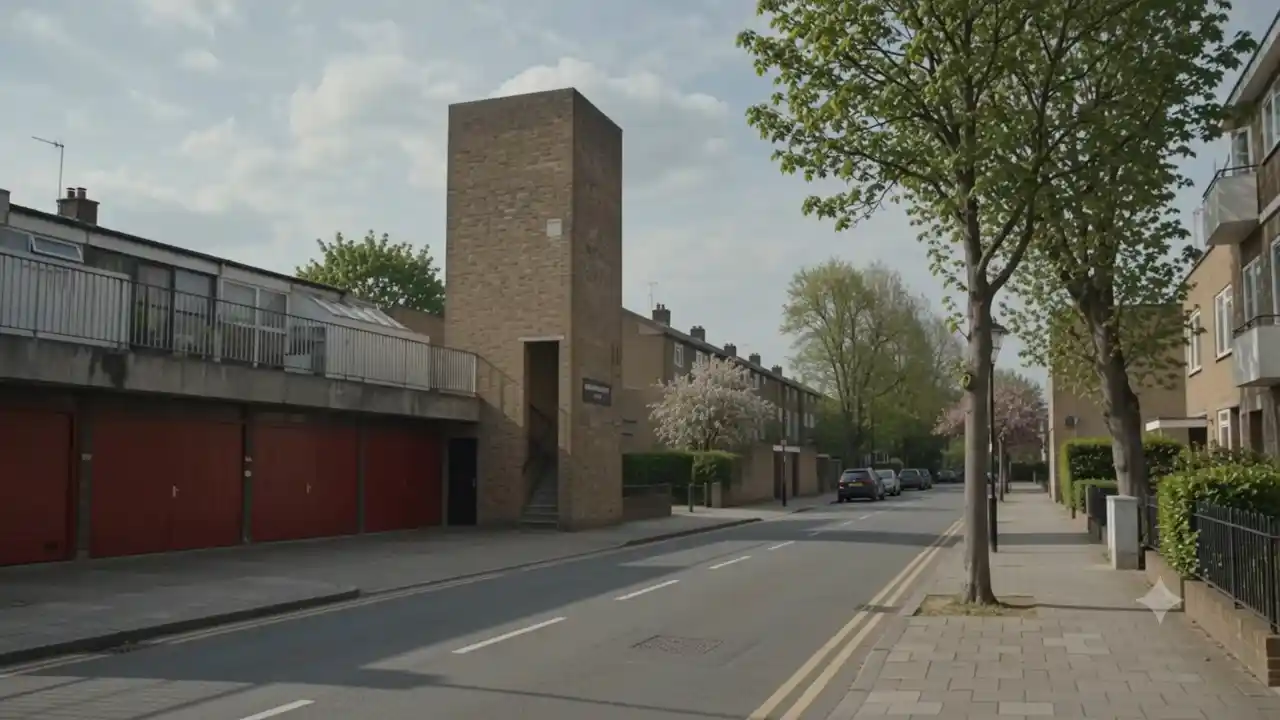
Vanbrugh Park Estate
Located within the historic Vanbrugh Park Estate—a seminal mid-century residential development—this project explores the transformation of an underutilized under-garage space into a vibrant public intervention. Recognizing the architectural significance of the estate, the primary design objective was to create a proposal that seamlessly integrates with its surrounding environment. To achieve this level of contextual harmony, I conducted extensive urban and historical research into the area. By analyzing the estate's distinct material palette, structural rhythms, and public-to-private spatial thresholds, the final intervention respects the heritage of the site while introducing a much-needed public asset that naturally weaves itself into the fabric of the neighborhood.
Site Research

Located within the historic Vanbrugh Park Estate—a seminal mid-century residential development—this project explores the transformation of an underutilized under-garage space into a vibrant public intervention. Recognizing the architectural significance of the estate, the primary design objective was to create a proposal that seamlessly integrates with its surrounding environment.
To achieve this level of contextual harmony, I conducted extensive urban and historical research into the area. By analyzing the estate's distinct material palette, structural rhythms, and public-to-private spatial thresholds, the final intervention respects the heritage of the site while introducing a much-needed public asset that naturally weaves itself into the fabric of the neighborhood.

Site Model

Area Context Plan

Garage & Street Layout

Building Technical Drawings

Design Development

To activate the sub-garage space, I proposed a dedicated Judo Dojo designed specifically for teenagers, offering the community a dynamic venue for physical discipline and martial arts. My design process began with an abstract, tactile exploration: I experimented with cutting paper into organic and geometric shapes, freely manipulating and shifting them to discover unexpected spatial configurations. This playful, hands-on prototyping method allowed me to break away from standard layouts and cultivate a fluid, dynamic interior environment that mirrors the energy, balance, and movement inherent to Judo.


Finalizing the Design

At this stage, I kept developing my design to determine how to position the windows to get the most natural light inside. I also started thinking about the materials. For the back of the dojo, I chose to use mostly brick so the exterior blends into the surrounding neighborhood. For the entrance side, I combined brick with large glass windows to let the sunlight flood in. Inside, I added a semicircle glass wall between the training area and the parents' waiting room. This keeps the teenagers from getting distracted during practice while still letting parents easily watch their kids train.
Proposed Plan

Proposed Section and Elevation

Structural Diagram

Design Model

Design Model Interior


Collage

Charcoal Drawing

Final Outcome

Collage to Reality
London · 2025
Continue →